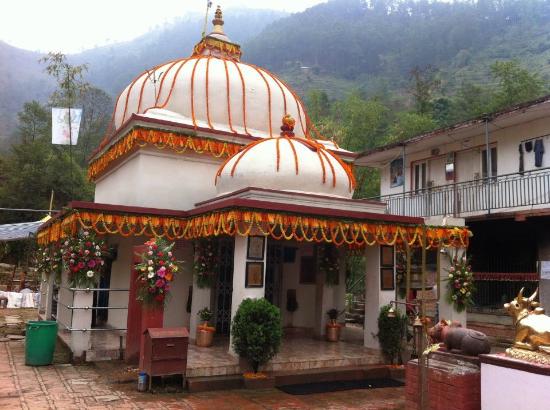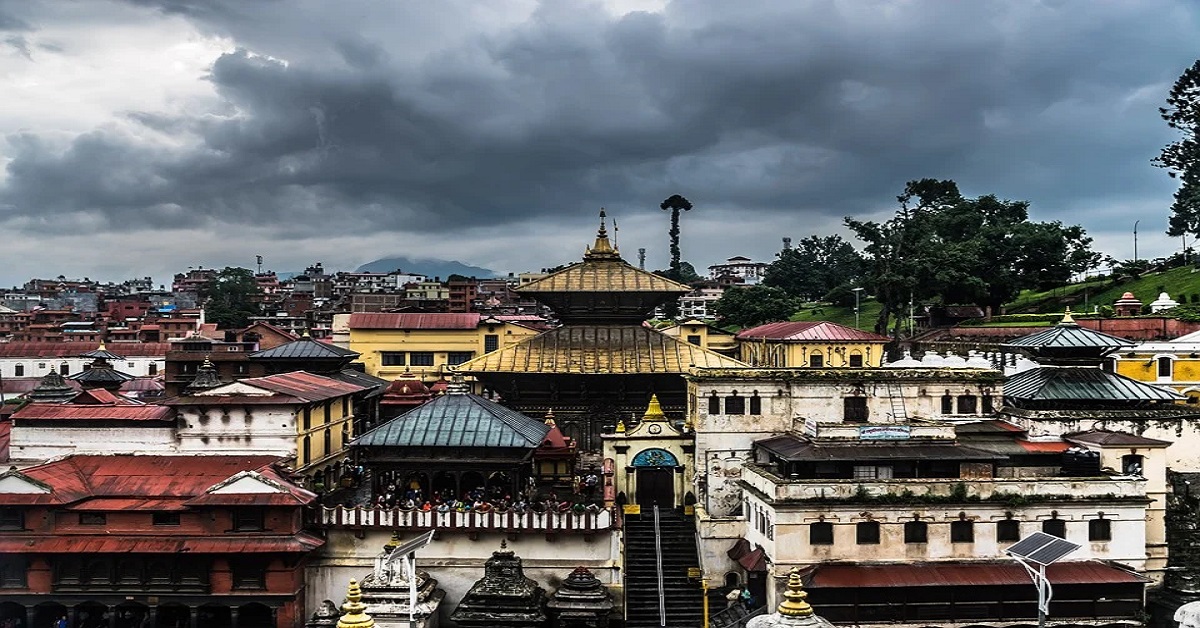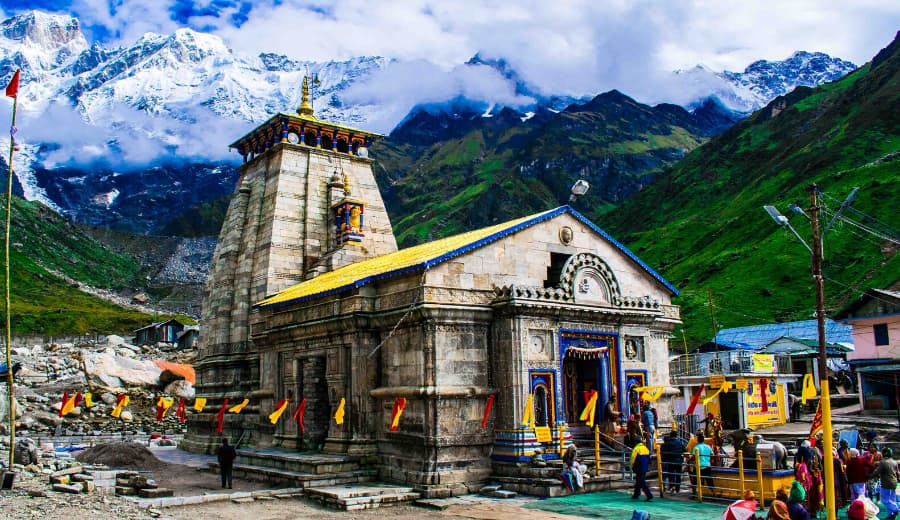
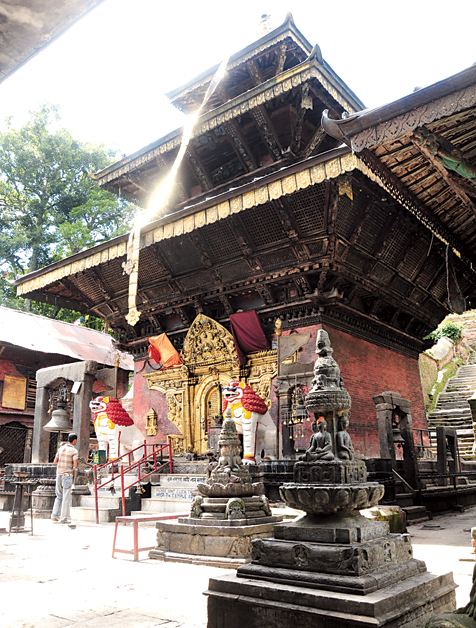
Located in the hills of Sakhu, northeast to Kathmandu lies one of the religious and most ancient sites of Nepal. Some people know the site as a shrine of Bajrayogini whereas some know it as a Bodishattva’s Temple. However, the temple is devoted to goddess Bajrayogini, who is also known as Red Face with Three Eyes in Hindu religion. Built in around 16th century, Bajrayogini temple holds the power and spirit of powerful blessings and good divine all around the place, and interestingly this temple is also a tantric temple sacred to both Buddhists and Hindus.
Goddess Bajrayogini is considered to be one of the wisest and the strongest deities, who exists in three forms as Bajrayogini, Bairabarahi and Krodikali. The temple holds back the history of a female and her menstrual period, her wisdom vision and undying spirit and motivation.
Goddess Bajrayogini
Bajrayogini, a female deity, is also known as a Tantric Buddhist (Female Buddha) all around the world mainly in among the Buddhists and Hindus. Bajrayogini is an Anuttarayoga Tantra’s (Highest Yogs Tantra) Ista Devata, simply a meditation deity whose essence is taken as a great transcendent passion which defines freedom of selfishness and illusion. The goddess is further described with the epithet ‘Sarvabuddha dakini’ whose practices includes Chod and Six Yogas of Naropa (Abhayakriti).
Chod is simply the practice of being willing to give up on everything for other sentient beings. Likewise, Six Yogas of Naropa includes, the yoga of inner heat, the yoga of the illusory body, the yoga of the clear light, the yoga of the dream state, the yoga of the intermediate state and the yoga of the transference of consciousness to a pure Buddhafield.
The goddess Bajrayogini of Bajrayogini Temple is in a deep red form with three eyes and flowing hair of a 16-year-old female. The third eye set on her forehead portrays wisdom and her ability to see everything in the past, present and future, while her red-colored body symbolizes the inner fire of spiritual transformation as well as life force (Shakti), mainly the blood of birth and menstrual blood. Her two arms symbolize the realization of two truths, her single face symbolizes that she has realized that all phenomena are of one nature desolation. While the curved knife in her right hand shows her power to cut the progression of the delusions and pain of her followers and living beings, and her drinking the blood from the Kapala symbolizes her experience of clear light of bliss.
Origin of Bajrayogini
The history behind the origin of goddess Bajrayogini is quite interesting and marks a great religious view from various mythological aspects.
The holy book, discovered a long time back, says the site of present Bajrayogini temple was once a forked piece of stone that even spouted fire. This happened when the rest of world was covered with snow and before long there emerged a five-colored flame, which came to be the Volcanic Goddess. Many of the priests have been making use of the nine surrounding caves for centuries to serve this temple ever since the goddess ordered that a temple built on the sight of her emergence. The entire site of the temple is covered richly with Newari cultural metal work, architectural carved wood details and ancient artifacts. Some of the temple carved around the Bajrayogini temple are even supposed to be old than the temple itself.
Bajrayogini Temple: Built by Whom?
Bajrayogini Temple also known to be Bodhisattva’s Temple was built in 16th century with a great cultural values and norms. The temple is a sort of complex temple which holds a great posture and value of the cultural aspects. The main temple was built by the King Pratap Malla which is a three-story high building in pagoda style. Carefully constructed with the utmost attention to detail, the temple was actually constructed during the period of Mandev and then renovated during the rule of Pratap Malla.
The temple stands at the shore of Sali Nadi, which gets more crowded during the whole month of Magh to worship the Goddess Swasthani and the most famous festival at this temple is ‘Bajrayogini Fair’ or ‘Bajrayogini Mela’ which is celebrated in Chaite Purnima, Full Moon Day.
Further, the area around Bajrayogini temple was previously selected for spots of the 29th Soil Conservation Day In 2009.
Earthquake and Damages
The 16th century’s-built temple, Bajrayogini temple had immense effect after the 2015 earthquake struck and destroyed the whole Sankhu city leaving the temple to be no exception. On April 25, 2015, the huge earthquake (one of the most devastating earthquakes in history of Nepal) marked the great damages all over the temple and over the whole Kathmandu city back then.
Built in historical style and method, the temple was not marked a safe place to be resistant for natural disaster like earthquake by engineers themselves. The temple was so affected that it required the support of metals and wooden poles to stand still. All the murtis (statues) were placed in a safe place while the renovation was continuing.